Romanticism and Revolution: Resouces
Brook Farm Institute for Critical Studies, October 2026
Week 1 Readings: Revolution and Pamphlet War
Primary Texts:
Richard Price, from A Discourse on the Love of Our Country (1789) (as excerpted in Norton Anthology of English Literature; along with the Norton introduction on the English response to the French Revolution; for full text, see here) (5 pages)
Edmund Burke, from Reflections on the Revolution in France (1790) (as excerpted in Norton Anthology of English Literature; for full text, see here) (7 pages)
Mary Wollstonecraft, “A Vindication of the Rights of Men” (1790) (43 pages)
Thomas Paine, from Rights of Man (1790) (as excerpted in Norton Anthology of English Literature; for full text, see here) (5 pages)
Recommended Secondary Texts:
Eric Hobsbawm, “Introduction” (pp. 1-4) and “Chapter 3: The French Revolution” (pp. 53-76), The Age of Revolutions: 1789-1848. (1962) (28 pages)
David Perkins, “The Construction of ‘The Romantic Movement’ as a Literary Classification.”Nineteenth-Century Literature 45:2 (Sept. 1990), pp. 129-143 (15 pages)
Lynn Festa, “The Philosopher and Her Poor: Wollstonecraft, Rancière, and the Rights and Duties of Humanity” (2019) (about 16 pages)
Additional Resources:
Hannah Arendt, “The Meaning of Revolution,” Sections 2, 4, 5 (pp. 29-35, 41-58) from On Revolution (1963) (24 pages)
![Sublime and beautiful reflections on the French revolution, or the man in the moon at large. [London: Pubd. by W. Dent] Photograph. Retrieved from the Library of Congress, <www.loc.gov/item/2004669851/>.](https://images.squarespace-cdn.com/content/v1/5949dc20bebafb954cbbcf71/800fed9d-a3e4-4768-8487-4bf6a1297d0b/Sublime_and_Beautiful.jpg)
Week 2 Readings: The Revolutionary Generation: Blake and Wordsworth
Primary Texts:
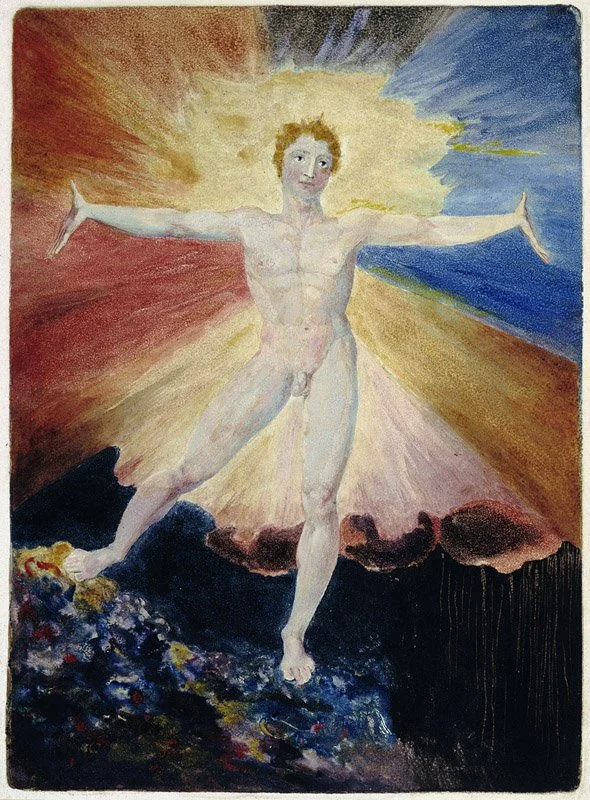
William Blake, America: A Prophecy (1793): please do peruse the book in its original format in the William Blake Archive; if a text-only version is easier to take in, here’s a scan (14 pages)
William Wordsworth, sonnets from 1802 (we’ll discuss “To Toussaint L’Ouverture,” “September 1st, 1802,” and possibly “London, 1802”) (2 pages)
William Wordsworth, fromThe Prelude (1805):
Book 6, lines 332-425 (PDF pages 99-101; Alan Liu’s “Imagination and Napoleon” section also discusses the immediately following section, lines 426-705) (3 pages—or to end of book, 10 pages)
Book 9 (PDF pages 155-180) (25 pages)
Book 10 (focus on lines 1-201) (PDF pages 181-209) (28 pages)
Recommended Secondary Texts:
Norton Anthology introduction to Blake (4 pages)
Saree Makdisi, “Chapter 1: Introduction” from William Blake and the Impossible History of the 1790s (15 pages)
Alan Liu, “The Motive of Description: the 1790 letter,” “Federation and Convention,” and “Imagination and Napoleon” sections (pp. 5-31, in Chapter 1) from Wordsworth: The Sense of History (1989) (NOTE: You’ll need to “check out” this book from the Internet Archive; let me know if you need some help setting up a free account there!) (27 pages; if you don’t have time for the whole reading, focus on pages 10-23)
C.L.R. James, “The Rise of Toussaint” from The Black Jacobins (Second Edition, 1963; PDF pages 79-88) (13 pages)
Additional Resources:
The section of The Black Jacobins I suggested above begins in about 1792, in media res; but/and the whole book is excellent. If you’d like to spend more time with James, and don’t have time to read the whole book, I’d recommend beginning in Chapter 3, “Parliament and Property” (PDF page 38)
Similarly, Alan Liu’s Wordsworth: The Sense of History is an incredibly rich text for our purposes! If you’d like to spend more time with Liu, I’d recommend Chapter 4, “The Poetics of Violence” and Chapter 8, “A Transformed Revolution: The Prelude Books 9-13”
Not in a scholarly key, but I came across this collection of Blake-inspired contemporary art and writing while researching for this class (Jacket2 feature, March 2026)
Week 3 Readings: Workers’ Rights: Byron on the Luddites and Shelley on Peterloo
Primary Texts:
George Gordon, Lord Byron, “Song for the Luddites” (1816) (1 page)
George Gordon, Lord Byron, Parliamentary address on the Frame Work Bill (scroll down the page slightly!) (1812) (about 8 pages)
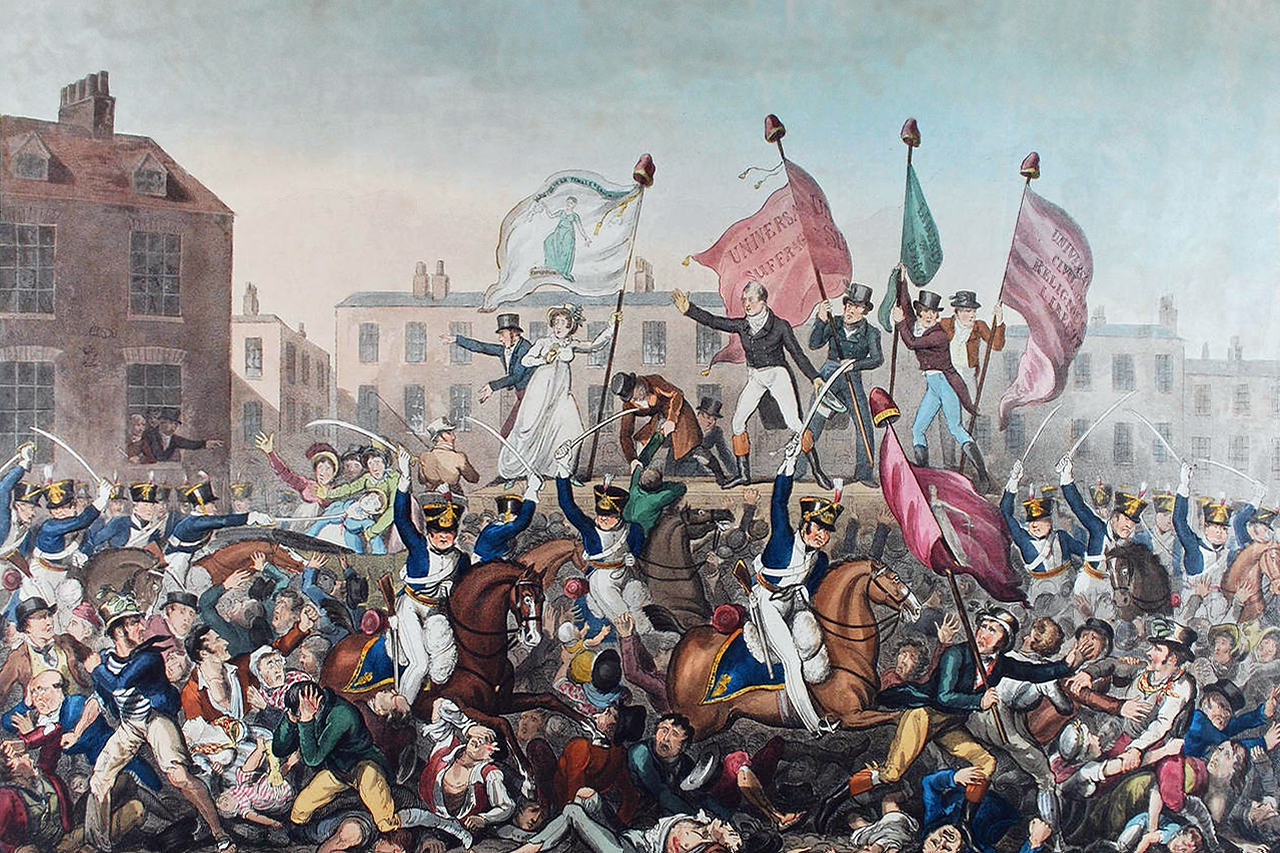
Percy Bysshe Shelley, “The Masque of Anarchy” (Written in 1819, published in 1832) and “England in 1819” (written in 1819, published in 1839) (12 pages)
Percy Bysshe Shelley, “A Defence of Poetry” (Written 1820, published 1840) (20 pages)
Recommended Secondary Texts:
Mark Steven, Class War: A Literary History, PDF pages 49-57 (8 pages)
E. P. Thompson, The Making of the English Working Class, pp. 669-700 (“Peterloo”; PDF pages 659-690) (30 pages)
Eric Lindstrom, “'Poetry is Not a Luxury': Audre Lorde and Shelleyan Poetics” (2021) (about 30 pages)
Additional Resources:
If you enjoy the Thompson, I’d suggest the whole long “Demagogues and Martyrs” section—PDF pages 300-354; or just read around in the book as you like!
If you’d like to know more about Peterloo, take a look at the range of primary materials in the University of Manchester’s Peterloo Collection
The Lindstrom essay is part of a cluster of papers in a 2021 issue of Romantic Circles on “Romantic Poetics of Public Feeling”; the introduction to this issue (by Lily Gurton-Wachter and Tristram Wolff) provides some useful framing on the role of emotion in Romantic-era political writing
Primary Texts:
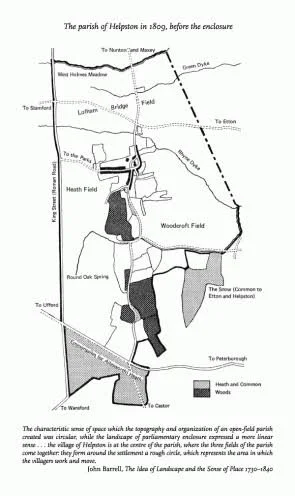
From John Clare: Major Works ed. Eric Robinson and David Powell (2004), “Helpstone” (written probably 1809-1813; pub. 1820), “The Lamentation of Round Oak Waters” (probably written around 1818, published 1985)(15 pages)
From I Am: The Selected Poetry of John Clare, ed. Jonathan Bate (2003): “from The Village Minstrel” (pub. 1821), “The Moors” (1827?), “Remembrances” (1830s), “The Fallen Elm” (1830s), “[The Lament of Swordy Well]” (1830s—Robinson dates to the Helpston period; Bate to the Northampton years) (26 pages)
Recommended Secondary Texts:
Eric Hobsbawm, “Land” (pp. 149-167) in The Age of Revolutions: 1789-1848. (1962) (18 pages)
Joseph Albernaz, “The Commons: Ruin and Romance,” Social Research: An International Quarterly 88.1 (Spring 2021) (36 pages)
John Barrell, “The Sense of Place in the Poetry of John Clare,” (pp. 98-188) from The Idea of Landscape and the Sense of Place 1730-1840: An Approach to the Poetry of John Clare (1972) (NOTE: You’ll need to “check out” this book from the Internet Archive; let me know if you need some help setting up a free account there!) (90 pages—but riveting!)
Additional Resources:
Full text of Clare’s first book, Poems Descriptive of Rural Life and Scenery (1820)
One model for Clare’s anti-enclosure poetry (especially “Helpstone”) is the much-anthologized 1770 Oliver Goldsmith anti-enclosure poem, “The Deserted Village” (about
If you’re not familiar with Garrett Hardin’s “Tragedy of the Commons,” which Albernaz discusses at length, you can find the original article here (6 pages)
Week 4 Readings: John Clare on Enclosure (or, on the other side of the industrial revolution)